Confirm barcode type
Identify whether the label uses GS1-128, SSCC, GTIN or other application identifiers.
GS1 label requirements affect print quality, data structure, quiet zones and label placement, so they should be confirmed early.
Guide to specifying a print and apply labeller for GS1 labels, GS1-128 barcodes, SSCC labels and logistics data. Lancing UK can help match the print engine, applicator type, label position and data handling to your production line.
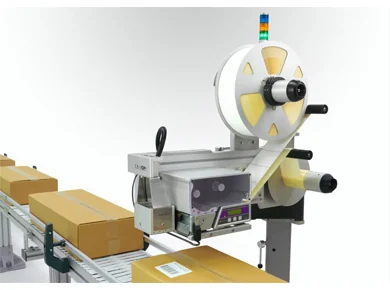
Use these points to compare machinery options before requesting a quotation.
Identify whether the label uses GS1-128, SSCC, GTIN or other application identifiers.
Allow enough space around the barcode in the label artwork.
Use suitable resolution and media for barcode clarity.
Put labels where scanners can read them consistently.
Connect product, batch and pallet data reliably.
Decide what happens if data is missing or a scan fails.
The more practical detail you provide, the easier it is to identify the correct print and apply configuration without unnecessary back-and-forth.
These pages help connect this requirement to nearby print and apply topics.
Common questions buyers ask when comparing print and apply labelling machines.
Yes, if the pack shape, label size, data source, throughput and application position are confirmed before specification.
Yes. Print and apply labellers are commonly specified for barcode, QR, batch, date, SSCC, lot, serial and destination data.
Systems can be configured with sensors, HMI controls, stands, conveyors, PLC I/O and database or ERP data links where required.
Send the label artwork or size, pack dimensions, line speed, application position, barcode format and photographs or video of the existing line.