Print and apply process
The print engine creates the label, then an applicator places it onto the pack.
A print and apply labeller prints a label and applies it automatically to a product, case, carton, box or pallet.
Clear explanation of what a print and apply labeller does, how it differs from a label printer and when to automate labelling. Lancing UK can help match the print engine, applicator type, label position and data handling to your production line.
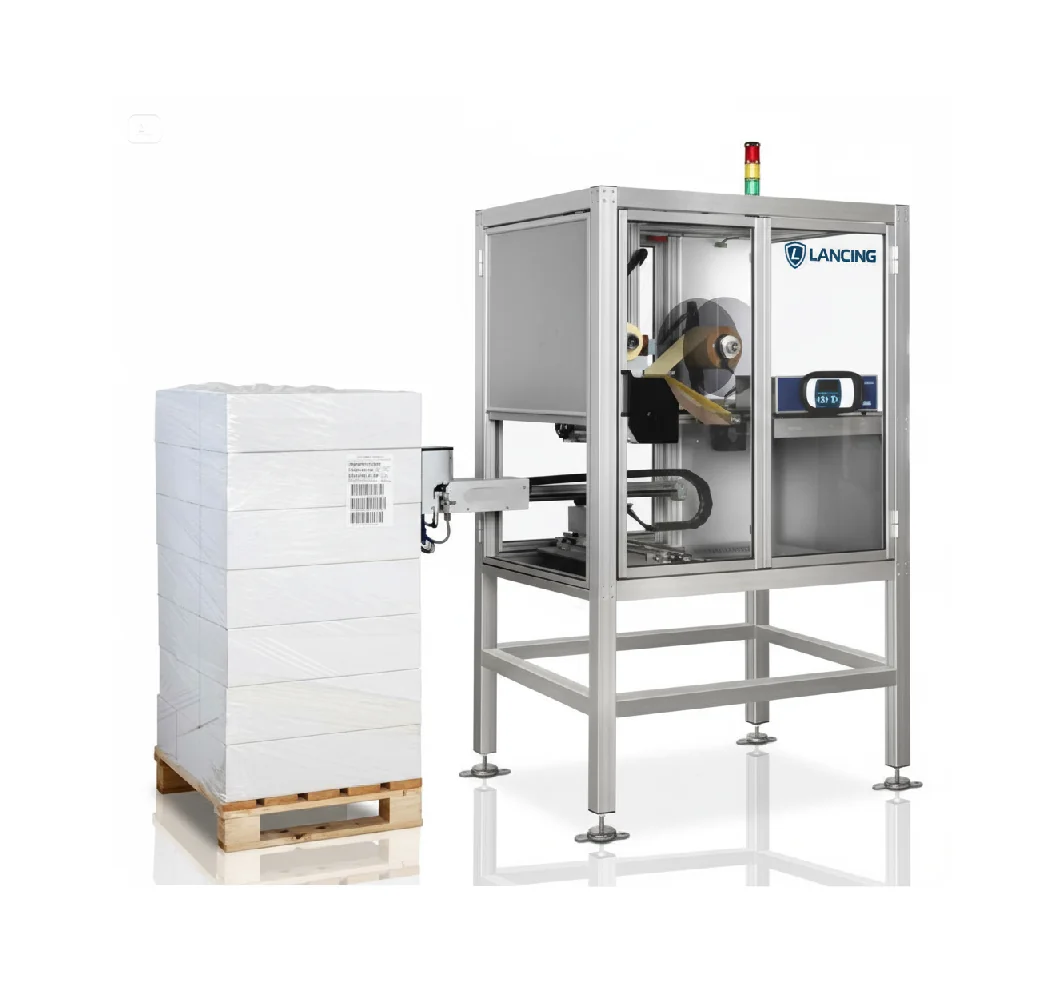
Use these points to compare machinery options before requesting a quotation.
The print engine creates the label, then an applicator places it onto the pack.
The label can include changing barcode, batch, date, QR, order or SSCC data.
Common methods include tamp, wipe, blow and corner-wrap.
Typical uses include cartons, cases, boxes, trays, pallets and dispatch labels.
Improve placement consistency and reduce repetitive manual labelling.
Start with label size, pack dimensions, speed and data source.
The more practical detail you provide, the easier it is to identify the correct print and apply configuration without unnecessary back-and-forth.
These pages help connect this requirement to nearby print and apply topics.
Common questions buyers ask when comparing print and apply labelling machines.
Yes, if the pack shape, label size, data source, throughput and application position are confirmed before specification.
Yes. Print and apply labellers are commonly specified for barcode, QR, batch, date, SSCC, lot, serial and destination data.
Systems can be configured with sensors, HMI controls, stands, conveyors, PLC I/O and database or ERP data links where required.
Send the label artwork or size, pack dimensions, line speed, application position, barcode format and photographs or video of the existing line.