Print data and templates
Confirm whether the top and side label applicator needs fixed templates, live production data, database records, scanner input, ERP data or warehouse labels.
Choose top, side or combined top-and-side label application for cartons, cases and products.
The correct label face depends on scanning, handling, product orientation and space around the conveyor.
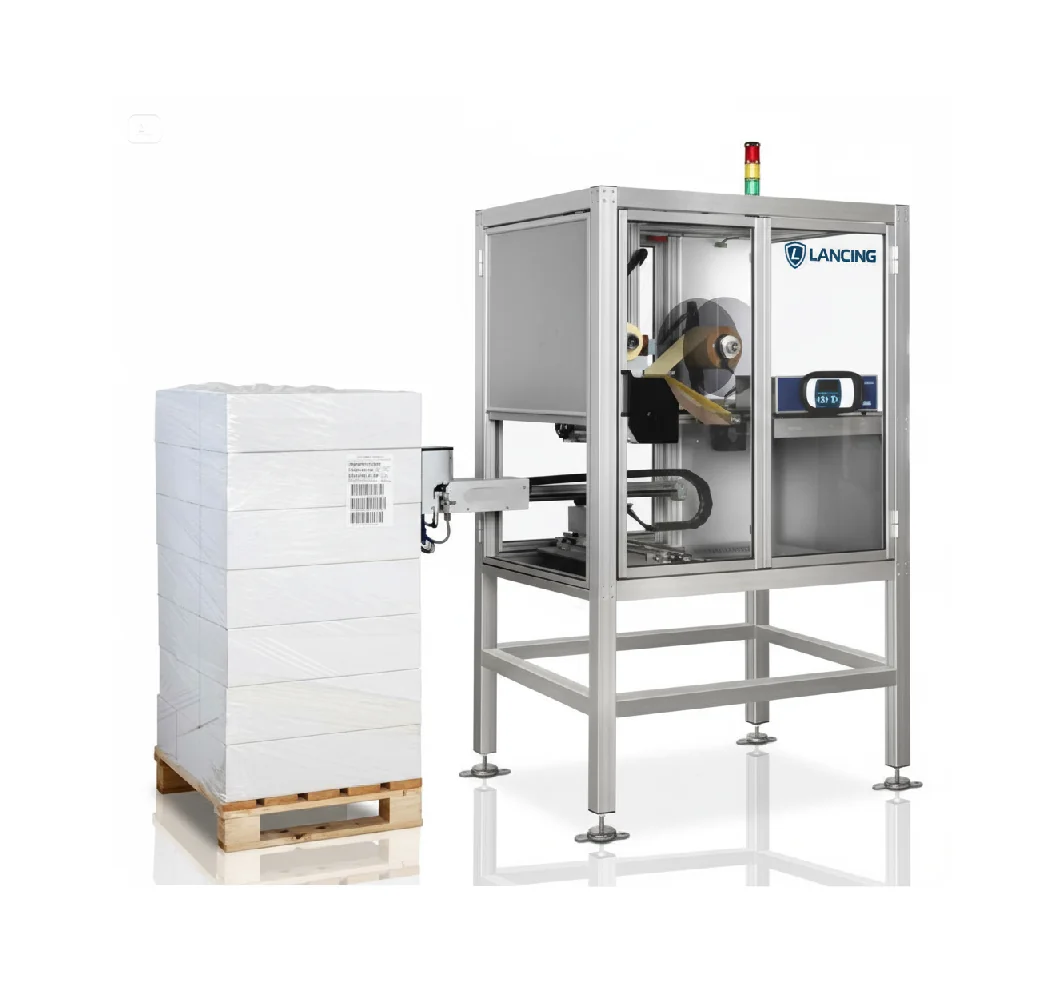
These are the details that normally decide whether a print and apply system will run reliably once installed.
Confirm whether the top and side label applicator needs fixed templates, live production data, database records, scanner input, ERP data or warehouse labels.
Choose between tamp, wipe-on, blow, side, top or corner-wrap application based on pack movement and label position.
Check print resolution, label stock, quiet zones, barcode size and scan orientation before finalising label artwork.
Confirm throughput, conveyor speed, product spacing and whether the pack stops, indexes or moves continuously.
Plan media loading, printhead access, HMI position, adjustment points and safe access for maintenance.
Allow for SKU variation, label changes, product size changes and data validation where needed.
Use this page to narrow the machine format before requesting a quotation.
Product, barcode, batch, date, dispatch and carrier-style labels applied to boxed goods.
Retail, food, industrial and pharmaceutical outer cases needing traceability or warehouse identification.
SSCC, GS1, destination, batch and warehouse labels applied to pallet faces or corners.
Labels printed at the point of receipt, production release, staging or final dispatch.
Flexible label templates and changeovers for multiple customer jobs and product formats.
Variable data labels carrying batch, lot, serial, QR or production information.
A successful labelling project is normally won or lost in the details: the data feed, print resolution, label material, product stability, applicator movement and access for operators. Lancing UK can review those factors before quotation so the machine is matched to the real production line.
These pages help searchers move from the broad requirement into the most suitable machine or guide.
Main printer-applicator range for cartons, cases, pallets and variable data labels.
RelatedAutomatic pallet labelling for SSCC, GS1 and warehouse identification.
RelatedPrinter-applicators for barcodes, QR codes, batch and product identification.
RelatedPractical checklist for selecting a print and apply labeller.
RelatedApplication page for outer-case and carton barcode labelling.
RelatedReduce manual case labelling with print and apply automation.
Quick answers for operations, engineering and purchasing teams.
A top and side label applicator is a labelling setup used to print or apply identification labels in a production, packaging, warehouse or distribution process. The exact configuration depends on label data, pack format, apply position and throughput.
Yes. Lancing UK can review your label size, product dimensions, line speed, data source and available space to suggest the most suitable print and apply configuration.
Send label size, pack dimensions, required label position, target throughput, barcode or data requirements, site photos or video, conveyor height and available utilities.
Print and apply systems are commonly used for variable data such as barcode, QR, batch, lot, expiry, destination and SSCC information.
Send Lancing UK the pack size, label size, apply position and line speed. The team can help identify the right print and apply route.