Can one print and apply labeller handle mixed carton sizes?

One print-and-apply labeller can often handle several carton sizes when every format stays within a validated application envelope and the line controls position, height or width variation, label size, product detection, applicator reach, recipe selection and data assignment. Random mixed-size flow is more demanding than scheduled batch changeover and may require automatic measurement or separate apply positions.

Direct answer

What this means for a real production line

Mixed-size capability depends on the physical application envelope, label requirements and the method used to identify each carton. Separate batch changeovers from random mixed flow and prove both deliberately when the production requirement includes both modes.

  • List minimum and maximum dimensions and required label positions.
  • Define how each carton and recipe are identified before printing.
  • Trial rapid format changes and the response to an out-of-range pack.
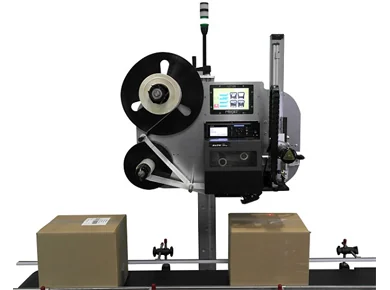
Case labeller configured for cartons on a conveyor
Format handling

Separate batch changeover from random mixed production

Both can use one station, but they require different product detection and control strategies.

Scheduled batch changeoverThe operator selects and verifies a recipe before a run of one pack format. Guides, applicator position and label template may be adjusted at a controlled changeover.
Random mixed sizesEach pack may need automatic identification or measurement so the correct data, label and application position are selected without manual intervention.
One label sizeSimplifies media handling, but the placement window must remain acceptable on every carton.
Several label sizesMay require controlled roll changes, more than one print engine or a design that avoids frequent media changes.
Fixed application heightWorks only when every carton presents a suitable face in the same controlled zone.
Variable application heightMay require product measurement, automatic adjustment or a different mechanical arrangement.

Define the physical application envelope

Record minimum and maximum length, width and height, surface variation, conveyor orientation, guide position, product gap and acceptable label window. Include damaged, bowed or lightly loaded cartons if they are part of normal production.

  • Confirm which dimensions change and which face remains controlled.
  • Mark the allowed label position on every format.
  • Check sensor visibility and trigger timing on the smallest and largest cartons.
  • Confirm applicator reach without collision or over-travel.
  • Include downstream guide rails and scanners in the layout.

Control recipes and product identity

The line must select the correct artwork, variable data, applicator position and inspection expectation for the physical carton. Recipe selection can be manual for controlled batches or automatic for mixed flow, but the operator should have a clear method to verify the active format.

Format identity

How is the carton type recognised before printing?

Recipe ownership

Who approves position, template and control settings?

Changeover proof

How is the first pack checked after a format change?

Exception handling

What happens when a carton is outside the approved envelope?

Build a representative mixed-format trial

Run the smallest, largest and most difficult normal cartons, every label size, each application face and the shortest normal product gap. Include a deliberate wrong recipe or unidentified carton to prove the exception response.

Buyer questions

Common questions about this decision

These answers identify the variables that should be confirmed before a machine, label or control sequence is fixed.

Can the label position stay constant across different carton sizes?

It can when all cartons present a common controlled edge or face and the required label window remains valid. If the relevant face height or width changes, the applicator or product guidance may need adjustment, measurement or a different application strategy.

Does the applicator need automatic height adjustment?

Only when the application point changes beyond the fixed mechanical window and mixed formats must run without manual changeover. A scheduled batch process may use a verified manual adjustment; random mixed production may need automatic measurement and positioning.

Can the same printer-applicator run different label sizes?

Many systems can run more than one approved size, but roll changes, print width, applicator pad, label presentation and recipe control must all be suitable. Frequent random changes between label sizes may be impractical without separate media paths or machines.

How are carton recipes selected safely?

Use an approved recipe linked to the carton identity, with controlled access to settings and a first-off check after changeover. For random flow, the identification or measurement result should be validated before the label is printed and applied.

When should separate labelling stations be considered?

Separate stations may be clearer when pack formats require incompatible label sizes, opposite application geometry, very different cycle times, independent customer rules or frequent random changes that one mechanism cannot cover reliably.

Need this answer applied to your line?

Send the label, pack dimensions, application position, line video, data source and required checks. Lancing UK can identify what must be confirmed before quotation.

Call nowContact us