Protect the symbol area
Keep bars or modules and their quiet zones clear of printed borders, text, die-cut edges, pack seams, corners, straps and other visual interference.
Position a barcode on a stable, flat and unobstructed area that preserves the symbol and its quiet zones, avoids seams, corners, straps, wrap folds and abrasion, and remains visible from the real downstream scanner approach. The finished labelled pack should be tested after application because a correct loose label can still be damaged, distorted or hidden on the product.
Choose barcode position from the scanner backwards: identify the required read face and every handling stage, then reserve a flat label area that protects symbol geometry and remains visible after wrapping, strapping, conveying and normal abrasion.
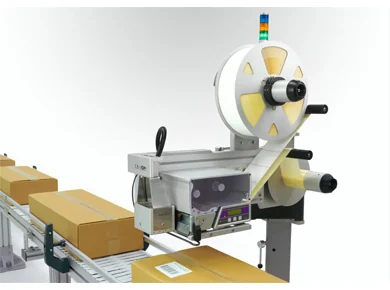
Barcode quality depends on data, print, label material, placement and scanner geometry. The check should therefore follow the label through application and downstream handling.
Keep bars or modules and their quiet zones clear of printed borders, text, die-cut edges, pack seams, corners, straps and other visual interference.
Avoid curvature, wrinkles, voids, crushed board and wrap folds that change the apparent geometry or contrast of the symbol.
Confirm distance, angle, field of view, product movement and whether the scanner sees the intended face before the pack leaves the controllable area.
A verifier can assess symbol quality under a defined method, while a production scanner confirms whether a symbol can be decoded in that scanner arrangement. After application, check that the label remains flat, undamaged and correctly oriented and that the decoded data matches the expected record where required.
Where GS1 barcodes or logistics labels are used, refer to the current GS1 UK barcoding guidance and the GS1 Logistic Label Guideline. Trading partners may add their own format or placement requirements, so the approved label specification should be supplied with the enquiry.
Is the encoded value valid and linked to the expected pack?
Are contrast, dimensions and quiet zones preserved?
Is the finished symbol flat, clear and accessible?
Can the real scanner decode it at production conditions?
These answers identify the variables that should be confirmed before a machine, label or control sequence is fixed.
A single successful decode only proves that one scanner read the symbol once under those conditions. The required evidence may include repeated production reads, expected-data comparison or formal verification against the relevant standard. The acceptance method should be agreed before testing.
A symbol should not be distorted around an edge. A corner-wrap label can carry information on two faces, but the barcode itself should remain on a suitable flat area unless the applicable specification explicitly permits otherwise and the finished pack is validated.
Orientation should follow the barcode specification, label geometry and scanner arrangement. Product movement and scanner line of sight can make one orientation more robust. Use the approved customer or GS1 rule and validate the finished pack in the real read position.
They can reduce contrast, create reflections, wrinkle the label or physically obscure the symbol. If the process places material over the label, trial the final wrapped and strapped pack and follow the customer’s logistics-label requirements.
Check label presence and position, wrinkles or damage, quiet-zone clearance, symbol visibility, scanner decode, expected-data agreement and the defined line response to failure. Formal verification should use the appropriate equipment and method where it is a requirement.
Use the related guidance for the next unresolved part of your labelling project.
Send the label, pack dimensions, application position, line video, data source and required checks. Lancing UK can identify what must be confirmed before quotation.