Changeover and labour
Consider how often formats change, which settings are manual, how first-off labels are approved and whether incorrect selection can be detected before production continues.
Project cost depends on the complete labelling process and integration scope rather than the printer-applicator alone.
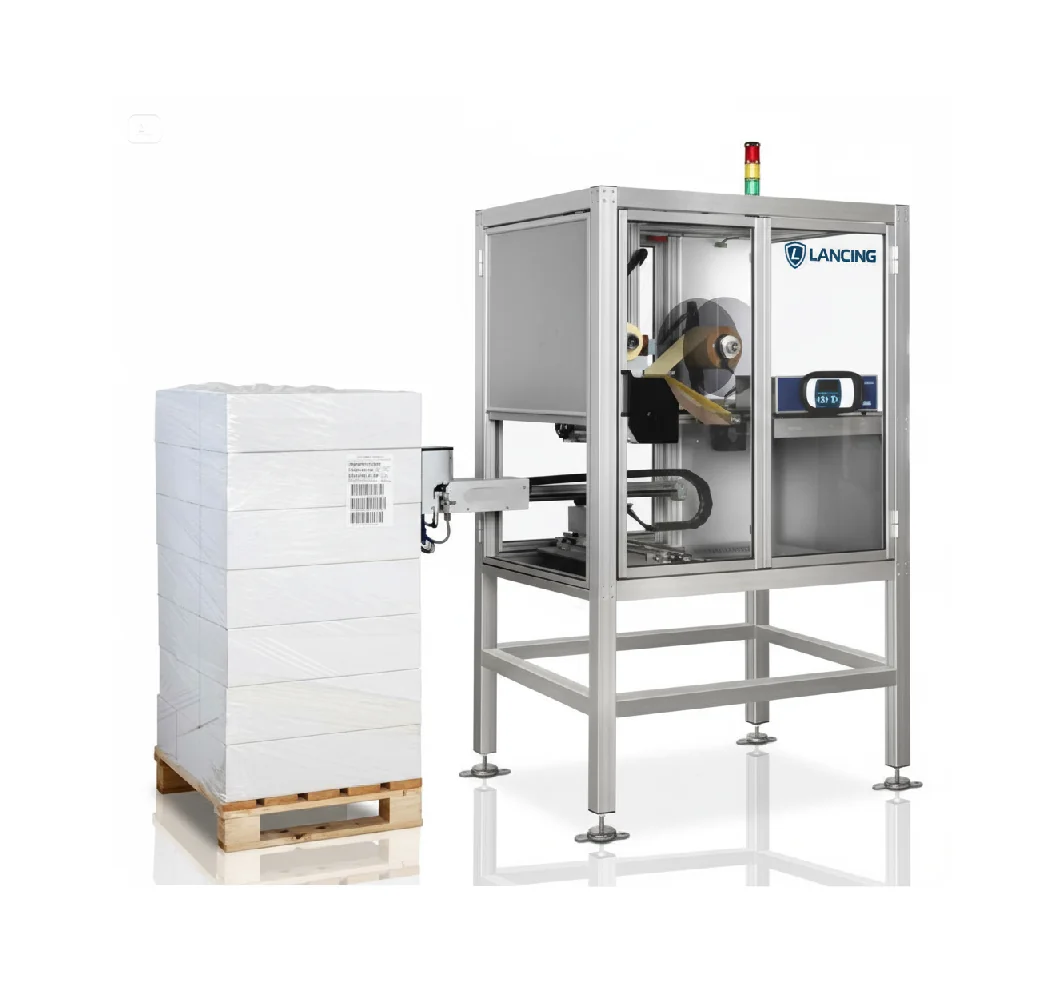
The cost of a print and apply system is affected by label size and resolution, applicator type and travel, product handling, guarding, controls, data interfaces, barcode inspection, reject or containment requirements, environmental protection, installation and acceptance testing. A useful quotation therefore needs the final label, pack range, line sequence and data responsibility—not only a request for a generic labeller price.
| Print requirement | Direct thermal or thermal transfer, label dimensions, 300 or 600 dpi option, variable fields, graphics and print-engine configuration. |
|---|---|
| Application method | Tamp, wipe, blow, corner wrap, top, side, front or pallet motion, including travel and required placement tolerance. |
| Product handling | Guides, indexing, conveyors, stops, measurement, orientation and the range of product formats. |
| Guarding and environment | Risk-reduction measures, access, dust, moisture, temperature, cleaning and protection appropriate to the site assessment. |
| Data and controls | Manual selection, PLC I/O, ERP/WMS/database connection, message mapping, template control and exception recovery. |
| Inspection and containment | Label presence, barcode decoding, expected-data comparison, formal verification, reject devices and confirmation of failed-pack removal. |
| Installation and acceptance | Site survey, drawings, integration, commissioning, training, sample trial, FAT/SAT evidence and travel requirements. |
| Consumables and support | Labels, ribbon, wear items, critical spares, maintenance access and the agreed support boundary. |
Consider how often formats change, which settings are manual, how first-off labels are approved and whether incorrect selection can be detected before production continues.
Review media access, fault diagnostics, controlled reprints, spare availability and whether a failed label can be corrected without losing product identity.
A lower hardware scope may omit expected-data comparison, containment or interface testing. Compare the consequence of an incorrect readable label with the cost of the control intended to prevent it.
Pallet systems often need longer applicator travel, more robust structures, larger labels, one-, two- or three-face motion, warehouse interfaces and protection around moving pallets. The exact difference depends on the line and required evidence.
A 600 dpi option can change the print engine and may affect print settings or throughput. It should be selected only when the final artwork, barcode density or small text benefits from the higher resolution after a real-label test.
The devices prove different things. A reader may decode the symbol, an expected-data check compares the decoded value, and a verifier assesses defined quality characteristics. Scope the required evidence first; price comparison without that distinction is misleading.
They may be part of an integrated project or remain customer scope. The quotation should state conveyor length, speed control, guides, stops, sensors, rejects, guarding and interfaces so there is no gap between machine and line responsibilities.
Yes when the project includes message mapping, database or ERP/WMS connection, template control, test environments, audit records or exception workflows. Define the source system and sample messages before the interface is priced.
Use one requirements matrix covering label, pack range, application face, output, controls, inspection, guarding, installation, acceptance and support. Mark every item as included, excluded or customer responsibility before comparing the totals.
Send the final label, format range, line video, data source, required checks and installation boundary so the scope can be stated clearly.