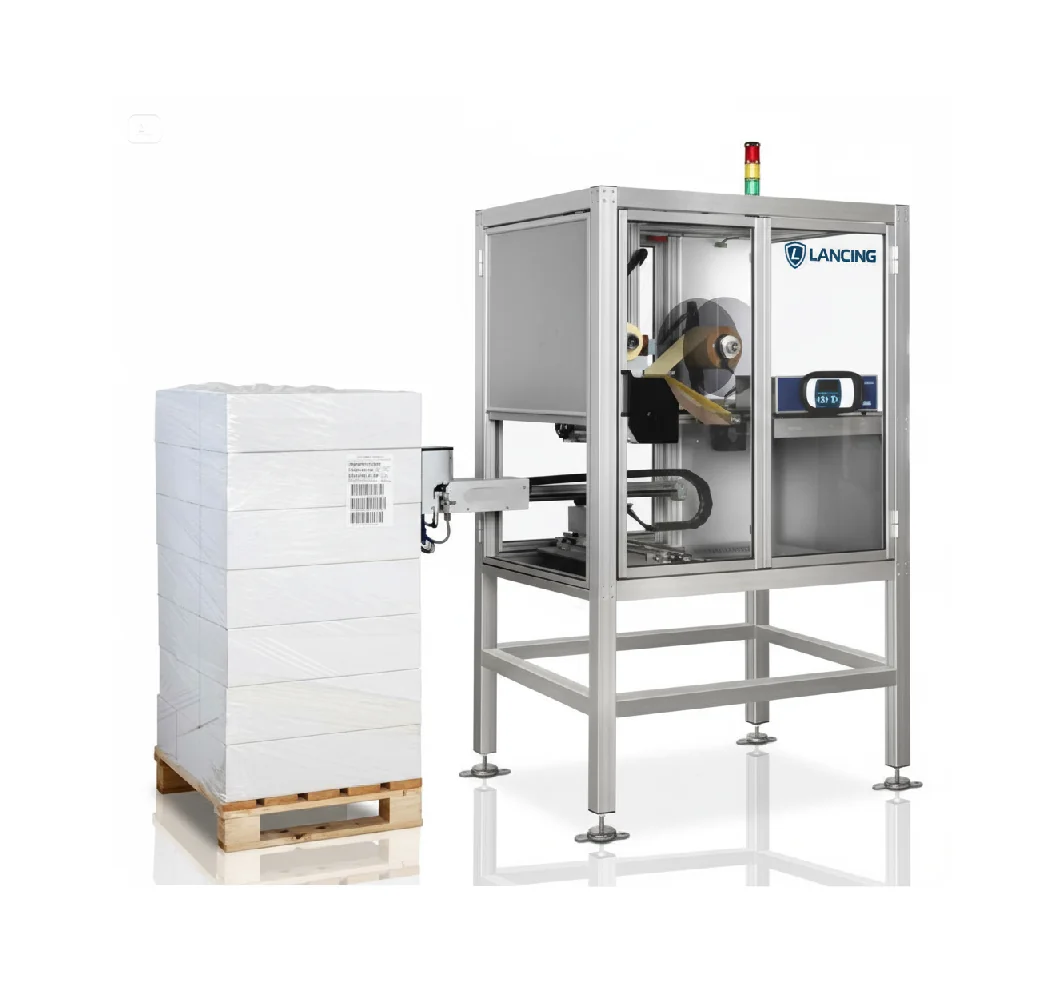
Print and apply labeller buying guide

Use this guide before requesting a quotation so the print engine, applicator, data connection and mounting arrangement match the real production line.

Guides

What this page helps you decide

Use this guide before requesting a quotation so the print engine, applicator, data connection and mounting arrangement match the real production line.

  • Clarify the label, barcode and data requirement before machine selection.
  • Choose the right applicator style for the pack movement and apply face.
  • Prepare better information for quotation, integration and installation.
Print and apply labeller buying guide

Specification points

These are the areas that usually decide whether a print and apply labeller runs smoothly on the line.

Start with the label and data

  • Confirm the label size, media type, roll core, print resolution and whether the label will be direct thermal or thermal transfer.
  • List every variable field that must appear on the label: GS1 barcode, SSCC, batch, lot, expiry, product code, destination, weight, order number or serial number.
  • Decide whether the print template will be selected by an operator, barcode scanner, PLC, ERP, WMS or database. This affects controls and validation more than the physical applicator.

Match the applicator to the pack movement

  • Tamp application is usually selected when accurate placement matters and the product can be detected or indexed at the apply point.
  • Wipe-on application suits products moving past the labelling head where the label can be dispensed onto the surface without a full tamp stroke.
  • Corner-wrap and pallet modules need enough space and product control to apply the label across one or more faces without damaging the label.

Information to send for a quotation

  • Pack dimensions and material, including the surface where the label is applied.
  • Line speed in packs per minute and product gap on the conveyor.
  • Label artwork, barcode type, target scan location and any validation requirements.
  • Photos or a short video of the line, conveyor height, available space, power and compressed air.

Questions buyers ask

Quick answers for planning the right labelling configuration.

How much information is needed to quote a print and apply labeller?

The most useful details are label size, pack size, apply position, barcode/data fields, line speed, conveyor height and how the printer receives data.

Is a print and apply system better than hand labelling?

It is usually better where labels contain live data, barcode accuracy matters, placement must be repeatable, or hand labelling is slowing the line.

Can the same machine run different label templates?

Yes, templates can normally be configured for different SKUs, product codes or customer labels, subject to the print engine and control setup.

Need this matched to a real line?

Send label size, pack dimensions, apply position, line speed and data source. Lancing UK can help specify a practical print and apply format.

Decision gates

Do not release the order until each evidence gate has an owner

A good buying process separates assumptions from information that has been demonstrated.

Application gateRepresentative packs and final label material have been assessed at the intended apply face and movement.
Data gateEach variable field, template, message source, trigger and acknowledgement has an identified owner.
Performance gateCycle, placement and print results are tied to named formats and test conditions.
Fault gateMissing product, missing data, print fault, no-label and verification failure responses are documented.
Access gateMedia loading, cleaning, adjustment, guarding and maintenance clearance are proven in the proposed layout.
Acceptance gateFactory and site checks state what constitutes pass, fail and controlled recovery.

Open the sample-trial guide

Call nowContact us