Mechanical scope
Confirm stand or bracket design, applicator approach, pack guidance, label face, adjustment, vibration, guarding and the route for changing label rolls or ribbon.
Use a measured site survey to define the mechanical, controls, data, safety, installation and acceptance boundary before the machine is selected.
A successful retrofit starts with a measured survey of the conveyor, pack presentation, product gap, available space, utilities, data source, controls, guarding and maintenance access. The labeller cannot by itself correct unstable product orientation, inadequate spacing or an undefined fault sequence. Those conditions must be included in the retrofit scope.
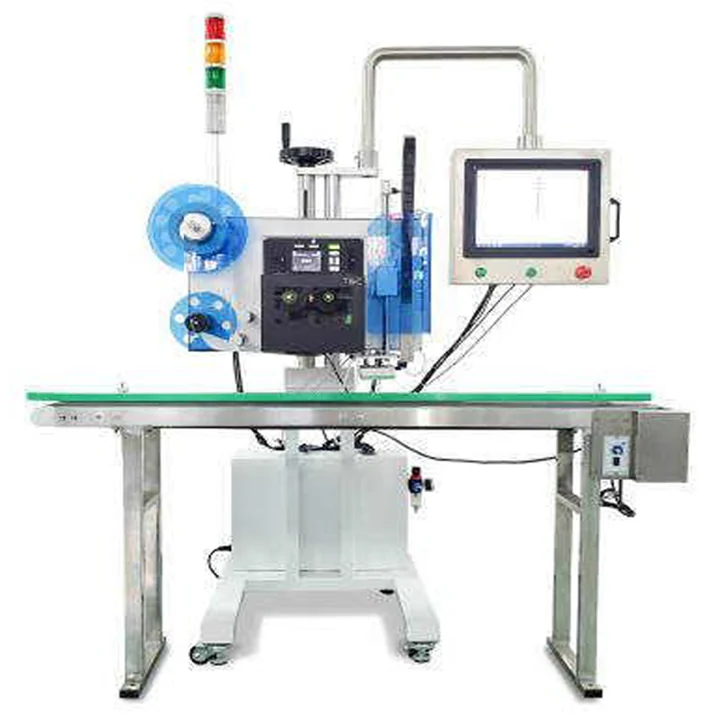
Record measurements and evidence rather than relying on nominal line data.
| Survey area | Evidence required | Why it matters |
|---|---|---|
| Pack envelope | Minimum, maximum and worst-normal packs, including surface and orientation. | Determines sensor position, applicator reach, label face and product control. |
| Conveyor behaviour | Actual speed range, minimum gap, stops, accumulation, tracking and a running video. | Sets the usable application cycle and reveals unstable presentation. |
| Space and access | Measured plan, elevations, maintenance clearance, operator route and consumable loading space. | Prevents a machine fitting physically but remaining impossible to service or operate. |
| Mounting and structure | Conveyor frame details, floor condition, vibration and the proposed stand or bracket location. | Application position must remain stable and adjustable without overloading existing equipment. |
| Utilities | Available electrical supply, compressed air where required, network and isolation points. | Confirms what can be connected safely and what infrastructure must be added. |
| Controls and data | PLC type, I/O, line states, data owner, trigger, recipe selection and communications boundary. | Defines how one pack receives the correct label and how the line reacts to faults. |
| Safety and guarding | Current risk assessment, existing guards, access points and safe intervention method. | The retrofit changes the machine-line interface and requires competent site-specific assessment. |
Confirm stand or bracket design, applicator approach, pack guidance, label face, adjustment, vibration, guarding and the route for changing label rolls or ribbon.
Define start, stop, healthy, ready, print request, cycle complete, fault, label-low and inspection signals. Assign ownership for tracking the physical pack through any delay or stop.
State where the label record and template are held, how a job is selected, how missing data is handled and how reprints are authorised after a communication interruption.
Plan isolation, delivery route, lifting, working area, shutdown window, wiring, network changes, software access and the order in which equipment is brought back online.
Prove every pack format, normal production, stops, restarts, label/ribbon changes, data loss, no-read, missed application and the agreed recovery route.
Agree how the line will operate if the new station cannot be commissioned within the planned window. A rollback or controlled manual route should be defined before shutdown.
Conveyors, guards and services often change after installation. Verify the live line, available access and worst-normal product position rather than relying solely on nominal drawings.
The labeller must complete the required sequence at the smallest normal gap, including print, label presentation, applicator travel, return and any inspection response.
Measure lateral movement, yaw, height and surface variation. If product presentation is not controlled, add guidance or handling to the retrofit boundary.
Decide which controller stops the line, identifies the affected pack, displays the fault and authorises recovery before software is written.
Printheads, peel assemblies, label rolls, ribbon, pads and sensors need practical access. A compact footprint is not useful if routine work requires dismantling adjacent equipment.
Use the complete format matrix and deliberately test stops, restarts and failure states. Acceptance should represent the actual production boundary.
Often, provided it can present products at a controlled speed, position and gap and has suitable structure and access. If it cannot, a short dedicated labelling conveyor or handling modification may be the safer route.
That depends on the selected applicator and controls. Confirm the actual machine configuration, pressure, quality, isolation and available capacity rather than assuming air is or is not required.
The answer depends on mechanical work, wiring, network changes, guarding, software, access and proving. A measured site survey and pre-build acceptance test allow more work to be completed before the shutdown.
Send a measured layout, photographs, running video, pack range, label artwork, actual speed and gap, PLC/I/O information, utilities, existing risk information and the available installation window.
Lancing can review pack presentation, available space, controls, utilities, guarding and the installation boundary before a retrofit configuration is fixed.