Lower-complexity route
A controlled pack, one apply face, stable speed, local template selection and straightforward mounting can reduce integration work. It still needs a real label and pack trial.
Build a comparable quotation around the complete machine, integration and acceptance boundary.
There is no responsible single price for a print-and-apply system without defining the label, pack, data and line. A compact side applicator on a controlled carton conveyor has a different engineering boundary from a multi-face pallet station with long reach, guards, SSCC data, inspection and reject recovery.
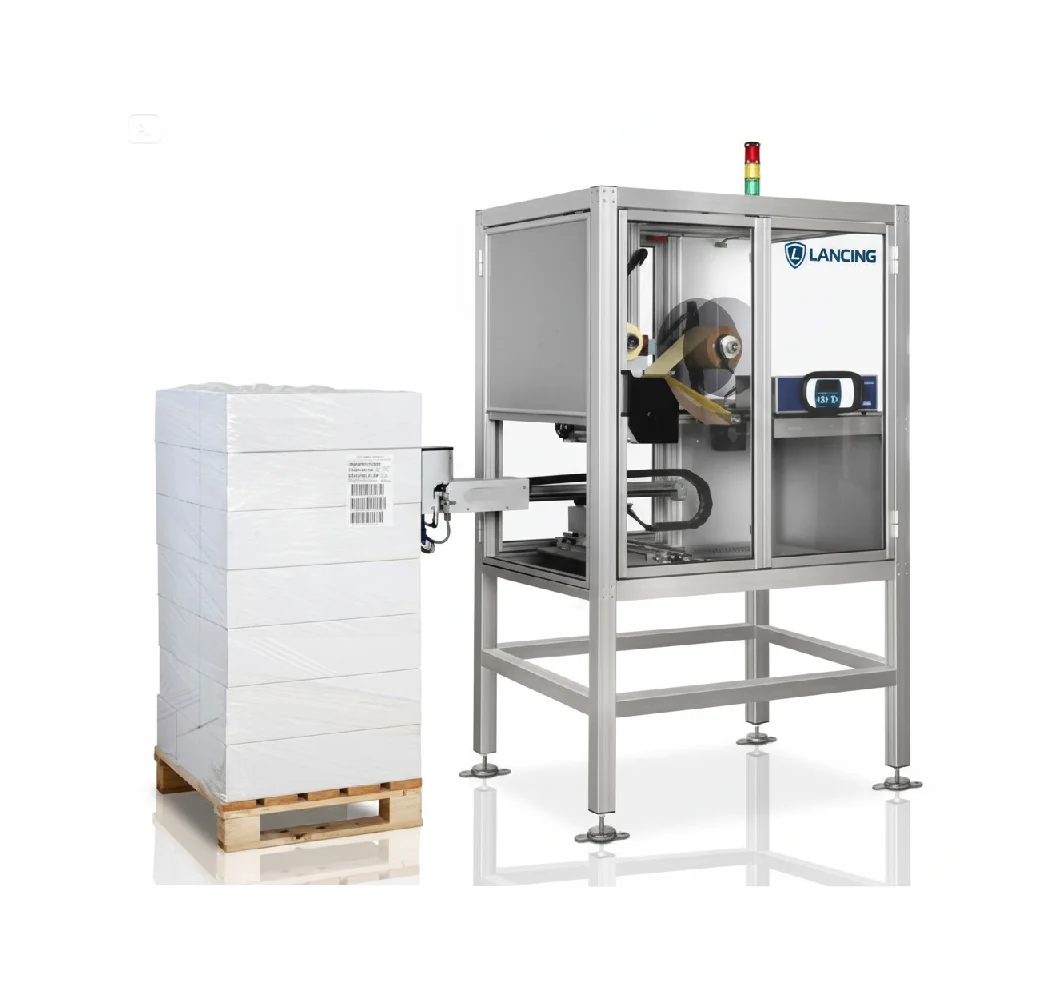
These factors explain why the final quotation changes without publishing unsupported prices.
| Print requirement | Direct thermal or thermal transfer, resolution, label dimensions, roll capacity, print engine and approved artwork. |
|---|---|
| Application method | Tamp, wipe, blow, swing or corner-wrap motion, application distance, pack movement and number of labelled faces. |
| Mechanical integration | Stand, frame, conveyor bracket, height adjustment, product guides, stop or clamp, guards and maintenance access. |
| Controls and data | HMI, sensors, PLC I/O, database, ERP or WMS interface, job selection, communications and fault recovery. |
| Inspection and containment | Presence, read, expected-data comparison, formal verification, reject or stop response and failed-pack tracking. |
| Project delivery | Trials, FAT, documentation, delivery, installation, commissioning, training, SAT and agreed support boundary. |
A controlled pack, one apply face, stable speed, local template selection and straightforward mounting can reduce integration work. It still needs a real label and pack trial.
Multiple faces, variable pack geometry, long reach, pallet handling, line stops, guards, data exchange and verification increase the engineering and test boundary.
Unspecified product variation, utilities, networking, site access, reject handling or customer acceptance can create cost after the initial machine selection. Capture them in the enquiry.
A better brief allows suppliers to compare the same scope and reduces unpriced assumptions.
Provide dimensions, samples, final artwork, roll details, apply position and surface photographs.
Provide a video, layout, conveyor height, speed, product gap, direction of travel, access and available footprint.
State the data source, barcode standard, job selection, inspection requirement and failed-pack response.
Identify trials, FAT, installation, commissioning, training, documentation, site hours and acceptance responsibilities.
Use these answers when comparing supplier scopes.
The main factors include print engine, resolution, label size, application method, reach, mounting, guarding, product handling, data integration, verification, reject control, trials, installation and documentation.
The pack movement, apply face, data source, fault response and safety boundary may be very different even when the label itself is similar.
A provisional route may be possible, but photographs, video and layout dimensions reduce assumptions about space, product presentation and integration.
Yes. The scope depends on what must be proven, when the result is available, how expected data is supplied and how a failed pack is contained.
Compare the complete boundary: machine, mounting, guards, controls, interfaces, trials, delivery, installation, training, documentation and assumptions. A lower machine-only figure may omit essential line work.
Use the machine and site guides to confirm which mounting, controls, inspection, tests and delivery services belong inside each quotation.
Send the pack, label, line video, data source and acceptance boundary so the scope can be compared on the same basis.
Send the label, pack, line video, data source and required acceptance evidence for a configuration review.