When thermal transfer is useful
- Labels need longer-lasting print or better resistance to handling.
- The selected label stock requires a ribbon.
- Small text, dense barcodes or customer requirements favour a specific print method.
Thermal transfer printing is used when the label stock and required durability need a ribbon rather than direct thermal print alone.
Thermal transfer printing is used when the label stock and required durability need a ribbon rather than direct thermal print alone.
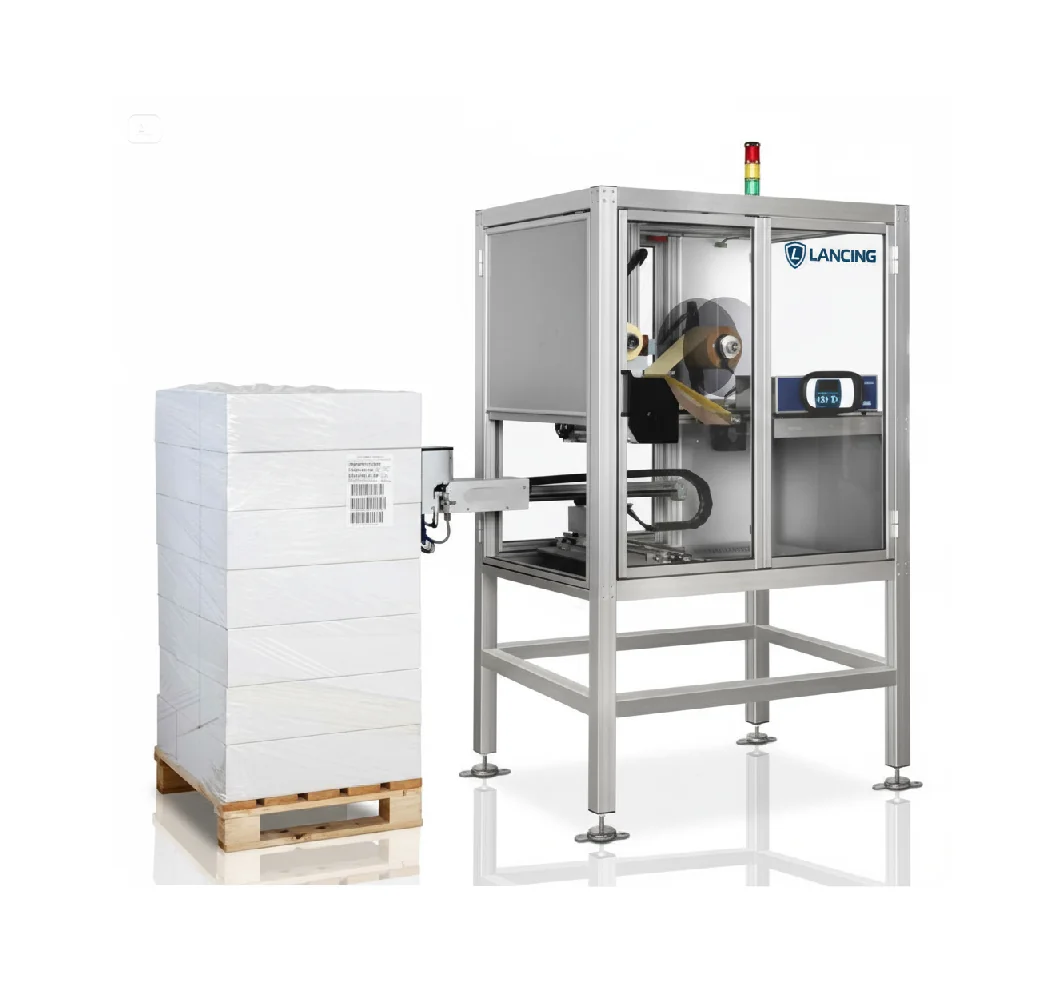
These are the areas that usually decide whether a print and apply labeller runs smoothly on the line.
Follow these internal links to move from guidance into machine, application and quotation pages.
Open the detailed page for print & apply labelling machines.
RelatedOpen the detailed page for barcode label printer applicator.
RelatedOpen the detailed page for barcode printer applicator guide.
RelatedOpen the detailed page for contact.
Quick answers for planning the right labelling configuration.
It prints the label using a ribbon and applies it automatically to the product, case or pallet.
It depends on label life, stock, environment and customer requirements.
Yes, it is commonly used for barcode labels when the resolution and label design are suitable.
Send label size, pack dimensions, apply position, line speed and data source. Lancing UK can help specify a practical print and apply format.
Thermal-transfer durability comes from a compatible ribbon, label face material and print process. The combination should be tested after application and through the expected handling route.
Confirm bar width, text size, graphics and printable area using the selected engine and final template.
Document the approved ribbon grade, label face material, adhesive, liner and storage conditions rather than substituting by appearance alone.
Record speed, darkness or energy settings, pressure and maintenance checks that produced the accepted sample.
Use supplier compatibility information and prove the combination with the final artwork, required durability and production environment.
Resolution must suit the artwork and symbol size, but media, ribbon, print speed, heat settings, printhead condition and barcode design also affect quality.
Direct thermal may suit applications where label life, heat, light, abrasion and storage conditions are acceptable. The actual distribution route should be reviewed.
Printhead and platen cleanliness, ribbon tracking, media path, pressure, temperature settings and worn components can all affect the result.
Use final label stock, approved ribbon, production artwork, representative barcodes and the intended print/application speed.