Corrugated cases
Board finish, recycled content, dust, fibre lift and panel flatness can change adhesion. Test the worst normal case and avoid placing the label across unsupported flaps or damaged edges unless the application is designed for it.
The label construction must be matched to the print method, pack surface, application conditions and required service life.
Choose print and apply label material by considering the surface being labelled, application temperature, storage environment, required label life, print method and barcode readability. The adhesive must wet the real surface under production conditions, while the facestock and ribbon—where used—must produce a durable image without creating peel, curl or release problems in the applicator.
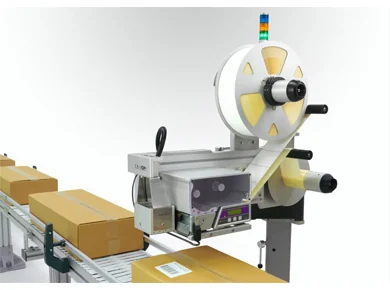
The print method changes the consumables, image durability and media choices. Final suitability should be confirmed with the actual label and storage conditions.
| Direct thermal | Uses heat-sensitive label media and no ribbon. It can simplify consumables but the image may be less suitable for long exposure to heat, sunlight, abrasion or chemicals. |
|---|---|
| Thermal transfer | Transfers ink from a ribbon to the label. It supports a wider range of facestocks and image durability options, provided the ribbon, print settings and label surface are correctly matched. |
| 300 or 600 dpi | The existing Lancing range includes 300 and 600 dpi options. Higher resolution can support fine text or dense barcode content, but the choice must be proven against print area, speed, label material and scan requirement. |
For the general printing distinction, see Zebra's explanation of direct thermal and thermal-transfer printing.
Board finish, recycled content, dust, fibre lift and panel flatness can change adhesion. Test the worst normal case and avoid placing the label across unsupported flaps or damaged edges unless the application is designed for it.
Film tension, wrinkles, movement and surface energy affect contact. The pack should be stable at the labelling point and the label should not bridge loose film or a changing corner without a suitable application method.
Application temperature and condensation can prevent the adhesive from wetting the surface. Trial the pack in the condition in which it reaches the labeller, not only after it has warmed and dried.
Surface cleanliness, mould release, reusable-pack washing and label removability can all matter. Decide whether the label must be permanent, removable or replaced repeatedly.
A label may make contact only at high points. Adhesive coat weight, application pressure and dwell become important, and a larger label does not automatically solve poor surface contact.
Facestock, top coating, adhesive and print image must all survive the expected period and conditions. This requirement should be written into the consumable specification and acceptance sample.
Direct thermal images can be affected by heat, sunlight, abrasion and some chemicals. Whether that matters depends on the required label life and handling environment. A representative ageing and handling trial is more reliable than selecting the print method from purchase price alone.
The ribbon must be compatible with the facestock and the required resistance to rubbing, heat or chemicals. Wax, wax-resin and resin families behave differently, so the final combination should be tested in the actual print engine and application.
It may be possible with a suitable adhesive and controlled surface condition, but condensation and low application temperature can prevent initial tack. Supply representative cold packs and describe storage, transport and dwell time before scanning.
It can. Recycled board may vary in fibre, dust, coatings and surface flatness. The trial should include the roughest and most variable normal case rather than only a clean sample from one batch.
The label must flex across the edge without lifting, tearing or pulling away from one panel. Label dimensions, grain, facestock stiffness, adhesive and corner geometry should be trialled with the final applicator motion.
Supply enough labels and packs to test every normal format, difficult surface, changeover and fault condition rather than only a short demonstration. Lancing can confirm the required quantity after the format matrix and test scope are agreed.
Include label dimensions, roll information, facestock, adhesive, ribbon, pack material and environmental conditions so the machine and consumables can be reviewed together.
A label’s ability to survive cold storage does not prove that it will form a bond on a surface already cold, wet or frosted. Record the actual pack condition at application and then assess the later storage and handling sequence.
Use the chilled and frozen case-labelling guide for a practical qualification sequence. Keep the exact material manufacturer’s application and service limits with the trial record.