Why do print and apply labels lift, wrinkle or apply inconsistently?
Label defects usually come from the interaction of media, adhesive, pack surface, product presentation and application motion, so the finished pack must be diagnosed as a complete process.
Start with the defect on the finished pack
A change to pressure, darkness or speed should not be the first response to every label fault. First identify whether the defect begins during printing, dispensing, pick-up, application or downstream handling. A repeatable wrinkle in one location suggests a different cause from random edge lift after cold storage.
Record the pack, label batch, machine recipe, environmental condition and exact defect before adjusting more than one variable.
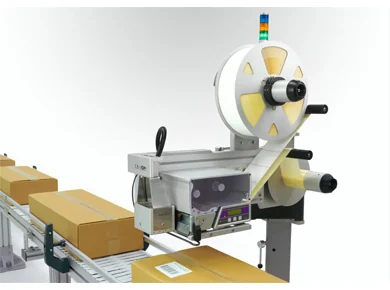
Symptom, likely evidence and first check
| Edges lifting | Check surface contamination, condensation, adhesive choice, contact area and time before downstream handling. |
|---|---|
| Bubbles or wrinkles | Check pack flatness, label path, wipe direction, trapped air, excess contact and changing surface speed. |
| Skewed label | Check pack skew, sensor position, web tracking, applicator alignment and product movement. |
| Missing label | Check print completion, peel, pick-up, label-on-pad state and trigger sequence. |
| Label remains on pad | Check vacuum or hold method, pad condition, release timing, static and application contact. |
| Scans before but not after application | Check finished placement, curvature, wrinkles, damage, scanner geometry and surface contrast. |
A controlled troubleshooting sequence
Preserve the failed sample
Mark the time, recipe, pack and label roll so the condition can be reproduced.
Locate the stage where the defect begins
Inspect print, dispense, applicator pick-up, finished application and downstream handling separately.
Change one variable
Use a documented adjustment and compare a controlled sample rather than several simultaneous changes.
Repeat under normal variation
Confirm the correction on more than one ideal pack and after representative handling.
When media and storage need investigation
Label face stock, adhesive, liner and ribbon where used should be treated as a qualified combination. Storage temperature, humidity, roll damage, dust and time out of packaging can affect dispensing or adhesion. If a new roll appears to fix the issue, retain the failed roll and batch details so the true difference can be identified.
Questions answered on this page
Each answer is written to remain clear when read on its own and to show the variables that must be confirmed for a real production line.
Why do labels lift after application?
Labels lift when the adhesive does not establish or retain sufficient contact with the real surface. Causes can include dust, condensation, low surface energy, texture, curvature, edge stress, unsuitable adhesive, insufficient contact or downstream movement before the bond develops. The failed pack and label combination should be retained for comparison.
What causes bubbles or wrinkles on a case label?
Bubbles and wrinkles can result from trapped air, a bowed or flexible surface, pack movement, wipe direction, label path error or uneven application contact. Note whether the defect is always in the same place. A fixed pattern often points to geometry or alignment; random defects may follow pack variation or contamination.
Can more application pressure solve poor adhesion?
More pressure helps only when insufficient contact is the actual cause and the pack can support it safely. It will not correct incompatible adhesive, condensation, dust or a label under continuous edge stress. Excess contact can deform soft packs, increase wrinkles or create mechanical wear.
How does label storage affect application?
Storage can affect roll shape, liner condition, adhesive behaviour, static and print quality. Protect rolls from contamination, crushing and unsuitable temperature or humidity, and rotate stock according to the label supplier’s instructions. Compare batch and storage history when a fault appears suddenly.
Why can a label work in a trial but fail in production?
The trial may not have included the production surface, temperature, speed, pack variation or downstream handling. Clean empty cartons at room temperature can behave differently from full, cold, dusty or bowed packs. Representative samples and sustained running reduce this gap.
What should be changed first when placement is inconsistent?
First confirm product presentation and the trigger relationship. Check skew, guides, sensor position, conveyor movement and whether the applicator starts from the same ready state. Adjusting applicator offsets before stabilising the pack can hide the symptom without removing the cause.
Related print and apply resources
Continue with the page that owns the next decision in the project.
Send the failed sample and the conditions that produced it
Provide the affected pack, label roll details, recipe, photographs, line video and environmental condition so the defect can be traced to the correct stage.