Outer cases
Use a stable flat area and test labels after case handling, stacking, stretch-wrapping or storage relevant to the route.
Plan durable product, case and pallet labels around the approved content, real pack and site environment.
Industrial and chemical goods may need product, case, drum, tote or pallet labels that remain readable through handling and storage. The labelling project should distinguish the approved label content from the machinery task, then test media, adhesive, print method, placement and scanner performance under the expected exposure.
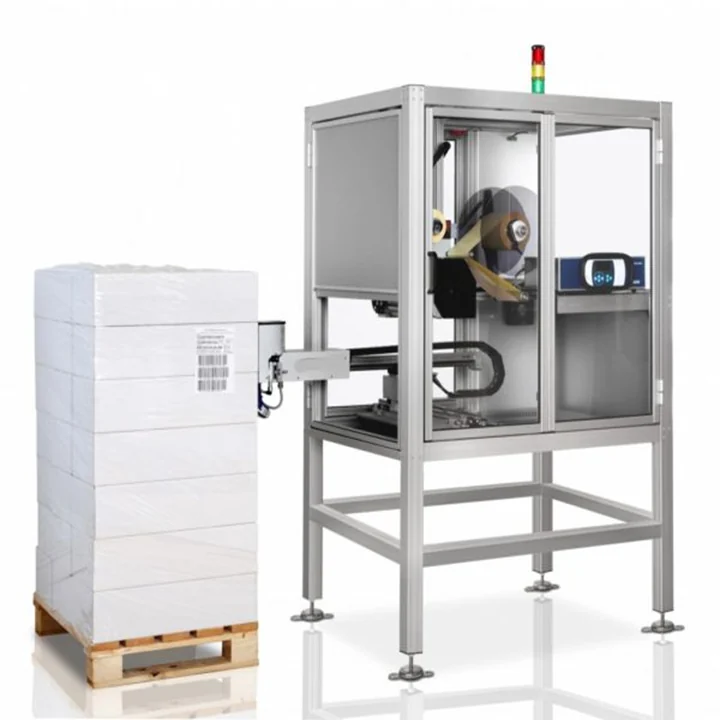
Suitability depends on the full product, site and handling route.
| Pack and surface | Container or case material, texture, curvature, moulding, contamination, wrap, coating and available label area. |
|---|---|
| Exposure | Handling, abrasion, moisture, temperature, light, oils, chemicals, cleaning agents and required label life. |
| Approved content | Customer-controlled artwork, product identity, batch/lot, date, hazard or handling information and barcode construction where applicable. |
| Print and media | Direct thermal or thermal transfer, label face stock, adhesive, ribbon where used, print resolution and representative ageing trial. |
| Environment | Dust, moisture, washdown, ventilation, hazardous-area classification and any specialist equipment or risk-assessment requirement. |
| Integration | Product trigger, batch record, line controls, inspection, reject or hold response and traceability record. |
Use a stable flat area and test labels after case handling, stacking, stretch-wrapping or storage relevant to the route.
Curvature, moulding, surface energy, contamination and handling may require a different applicator or label construction from a carton line.
Keep pallet identity, contents and shipping records controlled through aggregation, SSCC generation, application, inspection and dispatch.
Machine selection does not replace a competent site-specific assessment.
The customer confirms artwork, data and applicable legal or trading-partner requirements.
Review the SDS where relevant, site risk assessment, exposure, cleaning and any hazardous-area requirement with competent specialists.
Print and apply to representative packs, then expose and scan them through the expected handling route.
Test wrong or missing data, damaged labels, line stops, containment and authorised relabelling.
Answers for industrial and chemical-goods applications.
They can be used for suitable product, case or pallet labels, but media, adhesive, environment, cleaning and any hazardous-area requirements must be assessed for the specific site and product.
No. The customer remains responsible for approved content, classification and applicable legal or customer requirements. The machine reproduces and applies the approved label within its validated process.
Include handling, abrasion, moisture, temperature, sunlight, oils, chemicals, cleaning agents and storage conditions that the real pack may encounter.
It is often considered where greater label durability or a wider media choice is needed, but the exact ribbon/label combination must be tested for the application.
Provide the site risk assessment boundary, product and cleaning information, environmental classification, utilities and any requirement for a competent specialist assessment.
Use the print-method, pallet and acceptance pages to prove label life and application without making unsupported product-compliance assumptions.
Send the customer-approved label, product/pack information, expected exposure, site conditions and representative samples.
Lancing can review the mechanical labelling route while the customer retains control of product-specific legal and safety requirements.